Junior basketball shoes


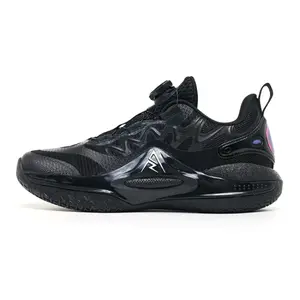
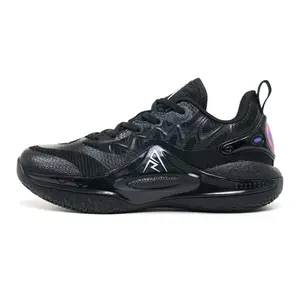


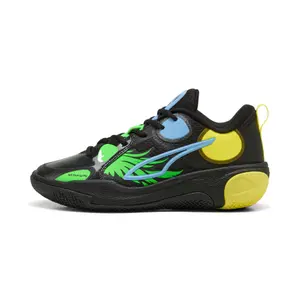

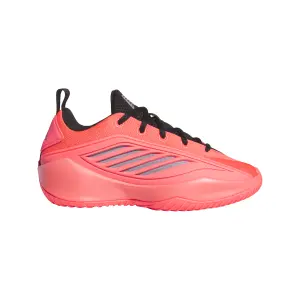
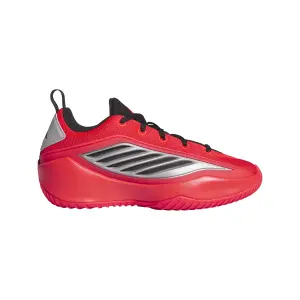
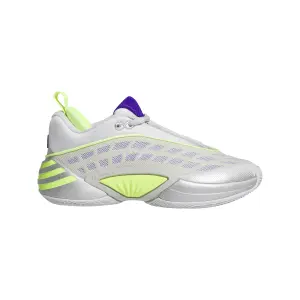
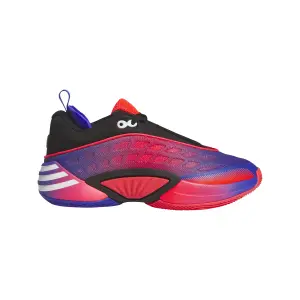
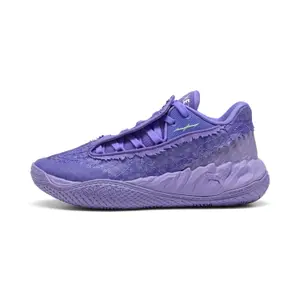
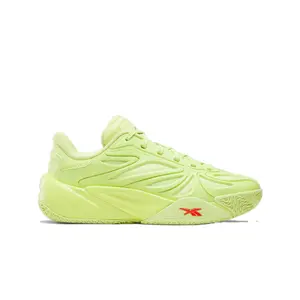
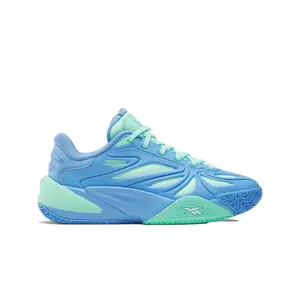


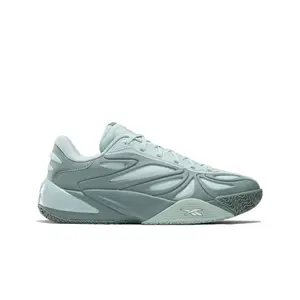
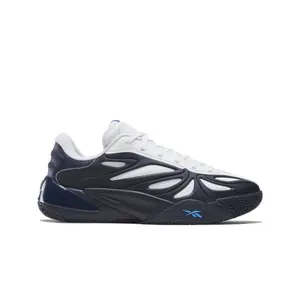
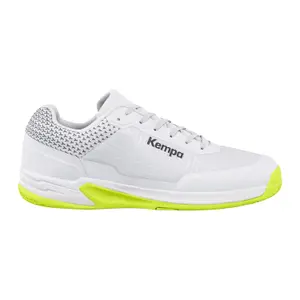


In mini-basket school, the hoop is often lowered to two metres sixty, and the junior shoes are also designed for young players: softer, lighter, and easy to put on. This page brings together sizes for children and teens for basketball and indoor sports.
Velcro for the little ones, laces as soon as the child knows how to tie them.
How much space to leave in front of the toes?
A small centimetre in front of the big toe is enough for a child's foot. More than that and the foot will slide forward with each braking, which interferes with support and wears out the shoe unevenly.
Measure the foot while standing, at the end of the day, with the sports sock on. Compare the length in centimetres to the size guide rather than relying on their everyday shoe size. A child's foot can grow a size in just a few months: check the size before each new session.
Velcro or laces depending on age
Velcro is suitable for the youngest ones, who change by themselves in the changing room and take time tying shoelaces. It holds the foot well as long as the child is light.
Once the game speeds up and the child can tie their knots, laces hold the instep better. A laced model with a strap on top combines the two: the support of lacing and the quickness of Velcro.
A flexible shoe to learn the supports
A young player needs to feel the ground to learn to stop, pivot, and jump. A sole that's too thick or too rigid prevents this.
Junior models therefore have thinner foam and softer uppers than adult versions. Several NBA signatures exist in children’s sizes, with the same look as the player’s model, but a lighter construction. For a first pair, a simple team model works perfectly.
Basketball, handball, volleyball: one pair for everything?
Many children try several indoor sports before choosing, and a versatile indoor shoe follows them everywhere. It grips the court and is lightweight.
A good part of this page consists of handball and volleyball shoes. If your child plays basketball in a club, filter by sport to keep only the models designed for basketball, which have better cushioning in the heel.
Related pages
When the foot exceeds children’s sizes, head to the men's shoes or the women's shoes, where mixed models start from smaller sizes. By brand, the adidas page offers children’s versions of its signatures, the Puma page features the MB line in junior size, and the Rigorer page has the AR line from Austin Reaves in the same colours as the adult line. All sizes remain on the shoes page.
Brands for young players
Six brands equip most young players who order from us.
- adidas offers its signatures in children's sizes, including Anthony Edwards' line, and has the Cross Em Up for beginners.
- Puma dresses LaMelo Ball fans in the MB line in children's sizes.
- Hummel outfits young handball players with the Multiplay Flex, available in both Velcro and laces.
- Asics offers the Upcourt, a simple and stable indoor shoe for beginners.
- Rigorer carries the AR line in junior sizes, appreciated by kids who copy their player's moves.
- Kempa, a handball brand, offers the Kourtfly in children's sizes.
Equipping a child without breaking the bank
A foot that grows quickly justifies looking for good deals. The special shoe offers and clearance often have children’s sizes at low prices. Then come the Black Friday shoes, pairs to slip under the tree from the Christmas shoes page, followed by the shoe sales, and pairs in stock are available from the shoes shipped in 24h page.
Frequently asked questions
Should I choose a size up for the shoes to last longer?
No. A shoe that is too big makes the foot float and destabilizes support. A half-size margin at most, then you buy a new pair when the toe touches the end.
At what age should a child switch to a real basketball shoe?
When the child plays in a club several times a week and starts jumping on the rebound, often around the U11 or U13 categories. Before that, a soft indoor shoe is enough to learn the basics.
Is a high-top shoe recommended for a child?
Not necessarily: a low or mid-cut upper allows the ankle to move, which helps the child build their support. The most important thing is that the heel stays well secured. If there's pain or injury, talk to a doctor.
How can I tell if the shoe has become too small?
Press your thumb at the tip of the shoe, with the child standing: if the big toe touches, it's time to change. Also check the wear on the rubber and the shape of the heel, which deforms when the foot presses on it.
Do junior shoes fit like adult ones?
Children's sizes often follow a separate chart, particularly in American sizing. Only the length of the foot in centimetres doesn’t change from one chart to another: that’s what needs to be compared.