Basketballs Molten


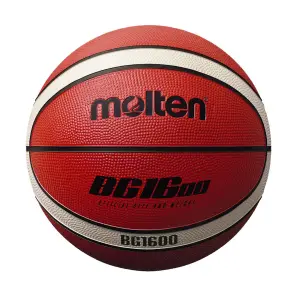


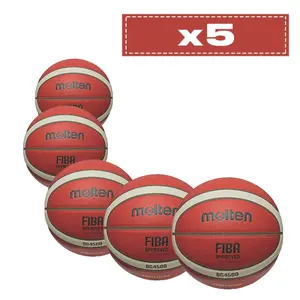
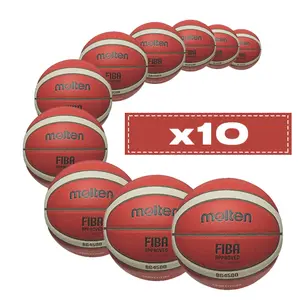
Since the early 1980s, the FIBA World Cups and Olympic tournaments have been played with a Japanese ball, and this requirement is reflected in the basketballs Molten on the page. The Compet balls have the FFBB approval for club matches, the BG training balls handle practice sessions, and a street ball takes over outside.
FFBB Compet: the match balls for the weekend
The Molten Compet balls are approved by the FFBB, making them suitable for official club matches. The BG4050 in size 7 and the BG4550 in size 6 feature a composite leather cover, designed solely for indoor use. The BG3850 FFBB completes this competition ball family.
The choice between size 6 and size 7 follows your category: size 6 for U13s and for all female players, size 7 for boys starting from U15s. If your club plays with a Compet, training with the same model helps you maintain your familiarity on match day.
BG3000, BG3200, BG2010, BG1600: practice balls
These models are built to last rather than shine in matches. The BG3000 and BG3200 have a synthetic leather cover that can be used indoors and outdoors. The BG2010, made of rubber, is recommended by the FFBB for basketball schools and also has FIBA approval. The BG1600, with its reinforced nylon casing, works on all types of surfaces.
For a child training in the playground as well as in the gym, the BG2010 or the BG1600 perform better than a match composite.
Street and smaller sizes
The B33T2000 is the street ball from Molten, with a cover designed for the concrete of the playground. The page also offers sizes 3, 4, and 5 for mini-basket, along with a few very small diameter balls, handy for the younger ones' skill games.
Packs of Molten to equip a group
Part of the page features packs of 3, 5, or 10 identical balls. You'll find the Compet FFBB, the BG3850, and the B33T2000: perfect for giving the same ball to an entire group, from match to shooting practice.
The ball for international competitions
Molten has been a partner of FIBA for over forty years and supplies the balls for its major competitions. Its construction with twelve panels and raised seams that guide finger positioning has become the brand's signature. This is also why many French clubs have adopted it for both training and matches.
Compare Molten with other brands
If you're unsure, compare like for like. The balls from Wilson focus on NBA culture, 3x3, and indoor Evolution. The balls from Spalding offer a range from rubber to composite in their TF line. For outdoor play, the balls from Nike target the playground, while the balls from Baden Sports offer models for all surfaces. All brands are featured on the balls by brand page.
A discounted Molten
Discounts can be found on the site's good deals pages. The Black Friday balls often include club models, the selection of Christmas balls helps choose a gift, and then the sales take over. For a ball available right away, check the items shipped in 24h, and for end-of-lines, the clearance.
Frequently asked questions
How to recognize a Molten approved by FFBB?
The FFBB label appears in the name of the product and on the ball itself, near the logo. All Compet models on the page carry it all. Without this mention, the ball is perfect for training but may be rejected in an official match.
Can a Molten Compet be used outdoors?
It's best to avoid it. Its composite leather loses its grip on concrete and shows wear from the first use. For outdoor play, choose a BG2010 in rubber or the B33T2000, and save the Compet for the court.
Why does a new Molten feel harder than the club's ball?
A new composite needs a few sessions to break in. The club balls have already been worked in with hundreds of dribbles. Play with yours regularly, wipe it with a slightly damp cloth, and it will become softer and gain grip.
What size of Molten for a U13 team?
Size 6, for both boys and girls. U13s all use this intermediate format before moving to size 7 reserved for boys from U15 onwards. The Compet BG4550 in size 6 matches this category in matches.
What pressure should a Molten ball be inflated to?
The recommended value is printed near the valve, generally between 0.49 and 0.63 bar. Without a gauge, drop the ball from shoulder height: it should bounce just above waist height. If it barely bounces, re-inflate it; if it bounces too high, let some air out.